Guide · Feeding
How to choose a portable bottle warmer
The 3am hotel feed. The motorway services at dusk. This is what actually matters when you are warming milk away from a kitchen — cordless temperature control, honest battery numbers, and a seal that survives a changing bag.
Updated July 2026 · 6 min read
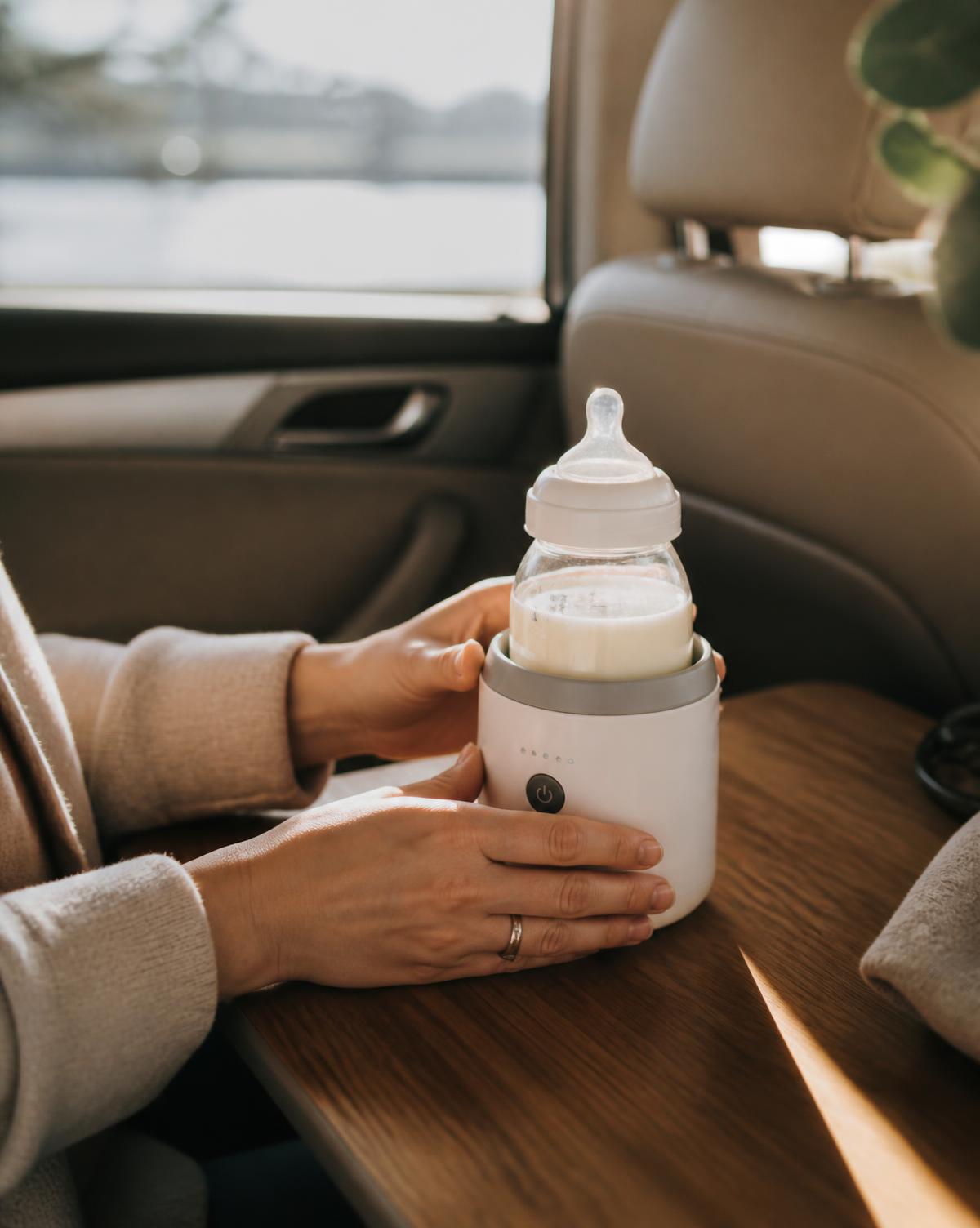
Six things that separate a good warmer from a gadget
- 01
Cordless temperature control
The single feature that decides whether a portable bottle warmer is useful. Look for a set-and-hold temperature (around 37–40°C / 98–104°F) rather than a timer. A timer guesses; a thermostat holds the feed at body temperature until your baby is ready.
- 02
Battery life, not just heat-up time
Two numbers matter. Heat-up time (5–10 minutes from fridge-cold is realistic) and how long the unit can hold temperature — a full charge should cover a day out, roughly 3–6 hours of holding or several warm-ups.
- 03
Bottle fit and adaptors
Wide-neck bottles do not fit every chamber. Check the internal diameter against your bottles, or choose a warmer that carries the milk itself and pours into the bottle at feeding time.
- 04
Formula, breast milk or both
Breast milk should never be scorched, so gentle water-jacket or convection heating beats direct high heat. For formula, look for a warmer that heats water to a precise temperature so you can mix in seconds.
- 05
Sealing, leaks and cleaning
It lives in a changing bag on its side. A silicone gasket, a lid that locks, and a chamber you can reach with a bottle brush are worth more than an extra feature on the box.
- 06
Travel and charging realities
USB-C is the standard worth insisting on — one cable for the car, the plane and the hotel. Confirm the battery is within airline carry-on limits (under 100Wh covers every consumer warmer).
Comparison
Four ways to warm milk away from home
| Type | Best for | Heat-up | Power | Watch out for |
|---|---|---|---|---|
| Cordless battery warmer | Days out, travel, night feeds away from home | 5–10 min from cold | USB-C rechargeable | Battery must be charged the night before |
| Insulated flask + warm water | Formula on the move, long-haul flights | Instant mix | None | Water cools over 6–8 hours; no reheating |
| Car adaptor warmer | Road trips and school runs | 8–15 min | 12V socket | Only works while the engine is on |
| Mains countertop warmer | Nursery and kitchen routine | 3–6 min | Wall socket | Not portable — tethered to an outlet |
For most parents the answer is a cordless, thermostat-controlled warmer plus a small insulated flask as backup — the combination that covers both breast milk and formula without hunting for a socket.
How to use one
Four steps to a safe warm feed
- 01
Charge and pre-warm
Top the warmer up the night before. Pre-warming the empty chamber for a minute cuts several minutes off the first feed.
- 02
Set body temperature
Choose 37–40°C. Drop the bottle in, seal, and let the thermostat do the rest while you keep walking.
- 03
Check on your wrist
A few drops on the inside of your wrist should feel neutral, not hot. Swirl — never shake breast milk — to even out the temperature.
- 04
Feed within the hour
Once warmed, use the feed within an hour and discard what is left. Never re-warm milk a second time.
Questions parents ask
Portable bottle warmer FAQ
- Are portable bottle warmers safe for breast milk?
- Yes, provided the warmer holds a gentle, controlled temperature around 37–40°C. Avoid anything that boils or steams milk directly, and never microwave breast milk — hot spots destroy nutrients and can scald.
- How long does a portable bottle warmer take to heat a bottle?
- Expect 5–10 minutes for a fridge-cold bottle and 3–5 minutes for room temperature. Pre-warming the chamber and using a narrower bottle both shorten the wait.
- Can I take a portable bottle warmer on a plane?
- Yes. Rechargeable bottle warmers use lithium batteries well under the 100Wh airline carry-on limit. Pack it in your cabin bag, not checked luggage, and empty any water before security.
- Cordless warmer or insulated flask of warm water?
- A cordless warmer wins if you feed breast milk or pre-made bottles, because it holds temperature on demand. A flask is lighter and simpler for powdered formula, but the water cools over the day and cannot be reheated.
- How do I clean a portable bottle warmer?
- Empty and dry the chamber after every outing, wipe the gasket, and descale monthly with a mix of water and white vinegar if it uses a water jacket. Never submerge the battery base.
Shop the shortlist
Our portable bottle warmers, chosen against this list
- Safe Baby Materials
- Parent Approved
- Secure Checkout
- Fast Worldwide Shipping
- Easy Returns